We assess, free of charge and with no obligation, whether retrofitting your testing machine is feasible and worthwhile. Find out more
Free assessment of your machine Find out more

We assess, free of charge and with no obligation, whether retrofitting your testing machine is feasible and worthwhile. Find out more
Free assessment of your machine Find out more
Retrofit · Revamping
Keep the frame. Get new electronics and software.
A well-built universal testing machine lasts for decades: the first things to age are the electronics, the PC and the software. With a retrofit, also known as revamping, we replace the control and measurement system with the UTM19-PRO controller and TestDesign™ software and, where needed, renew the electrical system and safety guards. Your machine is once again accurate, safe and ready for today’s standards, for a far smaller investment than a new machine.
Machines of any brand
Hydraulic and electromechanical
TestDesign™ software
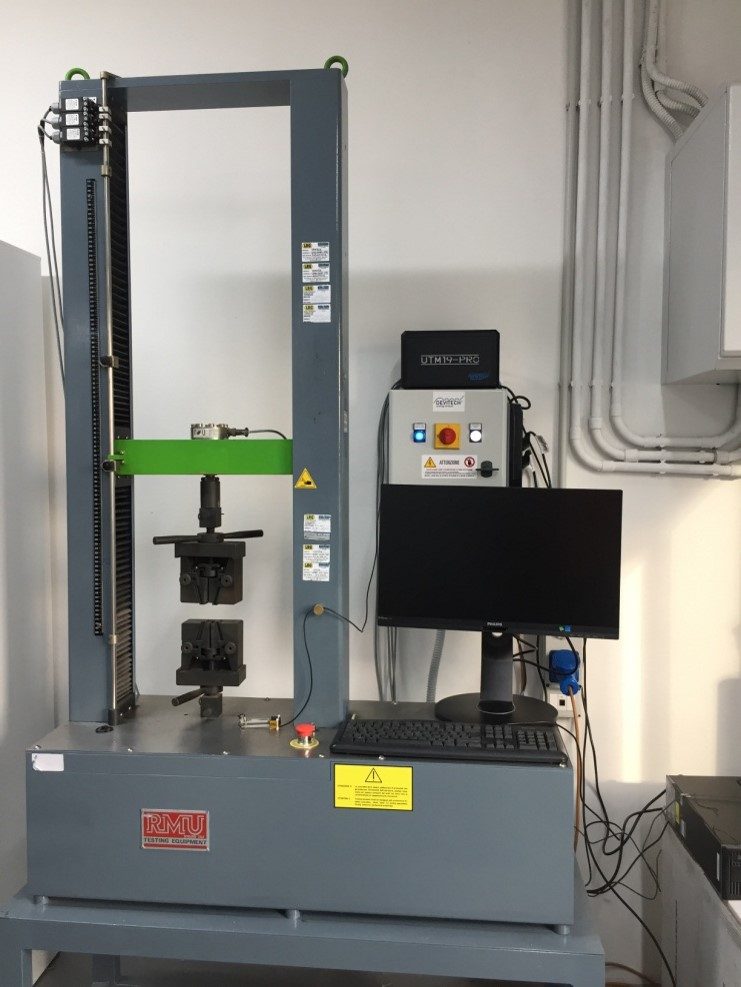
Signs not to ignore
If the frame and mechanics are in good condition, the problems usually lie elsewhere. If any of these situations sound familiar, a retrofit is probably the right choice.
The control PC runs an operating system that is no longer supported, such as Windows XP or Windows 7.
Spare parts for the original electronics are no longer available or keep getting more expensive.
The software can’t run tests to the current versions of the standards, for example strain rate control under ISO 6892-1.
Results are copied by hand or exported with difficulty, with no real traceability.
The electrical system, guards and safety devices are no longer adequate.
Operators waste time with slow, unintuitive interfaces.
The frame is the most expensive and longest-lasting part of the machine: keeping it reduces your investment, and the higher the capacity, the bigger the saving.
New control and measurement electronics for repeatable tests, set up to the ISO, EN and ASTM standards you use every day.
TestDesign™ stores, processes and shares your results; with cloud services you can keep an eye on the machine, maintenance and calibration.
You extend the life of a machine that works instead of building and shipping a new one: fewer raw materials and lower emissions.
Retrofit or new machine?
A retrofit doesn’t change the physical limits of the frame, such as capacity, stroke and stiffness. If you need different performance, we’ll tell you frankly and offer you a new machine or one of our certified used machines.
| Aspect | Devitech retrofit | New machine |
|---|---|---|
| Investment | Moderate: you pay for electronics, software and only the work that’s actually needed | Full cost of frame, mechanics, electronics and software |
| Frame and mechanics | The ones you already know, inspected and overhauled where needed | New |
| Electronics and software | New, with the UTM19-PRO controller and TestDesign™ | New |
| Electrical system and guards | Renewed where needed: electrical cabinet, wiring, guards and safety devices | New |
| Timing | Work scheduled with you, reduced downtime | Wait for production and delivery, then installation |
| Laboratory | No changes: the machine stays where it is | Shipping, installation and possibly new foundations |
| Environment | The existing structure is reused | A new structure to manufacture and ship |
How it works
01
You tell us about your machine and the tests you run; if needed, we come and see it. We’ll tell you clearly whether a retrofit makes sense.
02
We define what to replace and what to keep, from sensors to mechanical components, and send you a detailed quote.
03
We install the UTM19-PRO controller, the sensors and the TestDesign™ software and, where needed, rebuild the electrical system, guards and safety protections.
04
We calibrate the measurement chain against a certified reference standard, carry out final testing of the machine and train your operators.
Case studies
We’ve brought machines back into service for laboratories, universities and manufacturers, across different brands and years.







For companies in Italy, an upgraded, networked machine may qualify for the Transition 4.0 and 5.0 tax incentives, which also cover the modernization of existing machinery, provided it meets the requirements. We supply the technical information you need; the final check is up to your tax advisor.
A retrofit is also the opportunity to make the machine safe. When needed, we rebuild the electrical system and install up-to-date guards, protective shields and safety devices. On older machines we assess compliance with workplace safety requirements (in Italy, Legislative Decree 81/08), as we have already done on machines built in the 1990s.
Frequently asked questions
Essentially none: they are two names for the same job, the modernization of an existing machine by replacing outdated electronics, software and components. You’ll also hear it called modernization or upgrade.
Not always. It pays off when the frame and mechanics are in good condition and the machine’s performance is enough for your tests, and the advantage grows with capacity. On small tabletop machines the difference can be smaller: during the free assessment we’ll give you an honest opinion.
Universal testing machines of any brand for tensile, compression and flexural testing, both electromechanical and hydraulic.
Yes, and quite often: on older machines the electrical cabinet, wiring and guards almost always need attention. We rebuild the electrical system where needed and install suitable guards, shields and safety devices, such as emergency stop, limit switches and interlocks, so the machine is safe for the people who use it every day.
It depends on the work required. We plan it with you at the quotation stage to keep laboratory downtime to a minimum.
Often, yes: we check your existing sensors and, if they are in good condition, integrate them into the new system. Otherwise we propose replacing them.
Yes. After the work, the force measuring system must be verified according to ISO 7500-1 and the extensometers according to ISO 9513. TestDesign™ handles the calibration of the force sensors using a reference standard with an ACCREDIA calibration certificate (ACCREDIA is Italy’s national accreditation body).
It depends on the extent of the modification: if the retrofit changes the machine’s functions or introduces new risks, it may be considered a substantial modification. We assess this case by case during the project.
This website uses cookies
We use technical cookies that the website needs to work and, only with your consent, statistics cookies (Google Analytics) and third-party content (Google Maps). You can accept, reject or choose which ones to enable, and change your mind at any time from the "Cookie preferences" link at the bottom of the page. Details in our cookie policy and privacy policy.